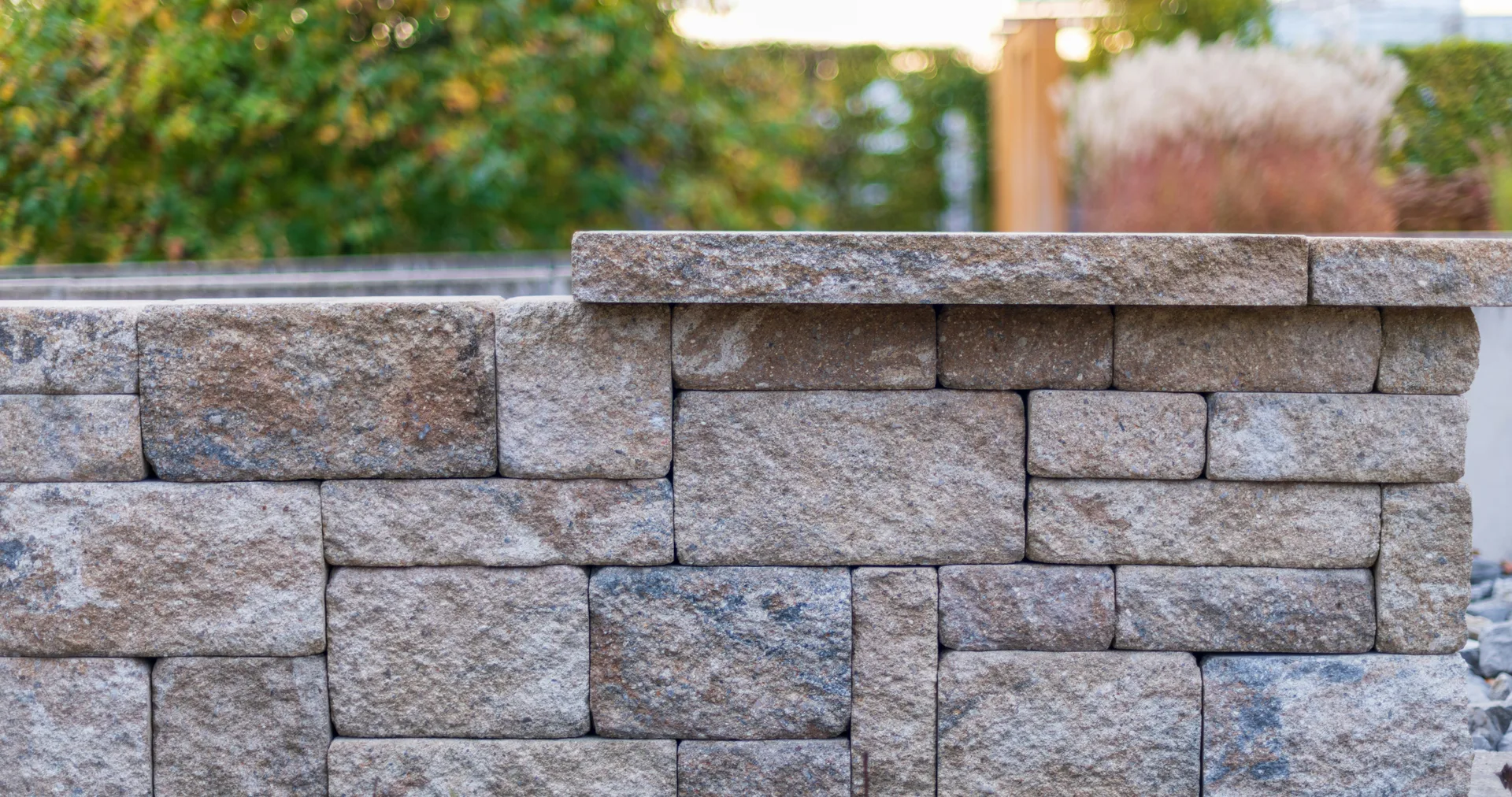
A Retaining Wall Is Engineered to Hold Back Soil. It's Not Engineered to Hold Back Water.
This single distinction explains nearly every retaining wall failure we've ever assessed. A properly designed wall accounts for the weight and lateral pressure of dry-to-moderately-damp soil. It is not designed to resist the dramatically higher pressure of saturated soil and standing water , because it was never supposed to have to. The entire purpose of a wall's drainage system (weeping tile, free-draining backfill, surface grading) is to prevent water from ever accumulating behind the wall in the first place. When that system works, the wall only ever has to resist what it was designed for. When that system fails, the wall is suddenly being asked to resist a force it was never engineered to handle , and it starts to lose that fight.
Hydrostatic Pressure: The Actual Number Behind "Water Is Heavy"
Water weighs roughly 1,000 kilograms per cubic metre. Saturated soil , soil with its pore spaces filled with water rather than air , weighs meaningfully more than the same soil dry, and unlike dry soil, saturated soil also transmits pressure hydrostatically, the way a fluid does, instead of resisting it through internal friction the way dry, well-drained soil does. In practical terms: a retaining wall holding back six feet of properly drained soil is resisting a very different, much more manageable force than the same wall holding back six feet of saturated soil after a drainage system has failed. This is the single biggest reason a wall that held for decades can start failing within a few years once its drainage stops working , the soil behind it hasn't gotten heavier in a stable sense, it's periodically becoming saturated in a way the wall was never asked to resist.
Freeze-Thaw: Why Ontario Winters Are Uniquely Hard on Walls
Water expands roughly 9% in volume when it freezes. Behind a retaining wall with compromised drainage, water trapped in the backfill freezes and expands, physically pushing outward against the wall , a real, measurable mechanical force, not a metaphorical one. When it thaws, the wall doesn't fully return to its original position; a small amount of permanent outward movement remains. Repeat this cycle across a typical Ontario winter, which can swing through multiple freeze-thaw cycles instead of one continuous freeze, and the cumulative movement compounds season over season. This is why a wall's rate of failure often visibly accelerates through winter and into spring. Each freeze-thaw event is doing incremental, permanent damage that adds up.
Surcharge Load: Why What's Above the Wall Changes Everything
A retaining wall with nothing above it but lawn resists a known, relatively modest, and stable load. Add a driveway, a building, or a pool above the wall, and you've added surcharge load , extra weight pressing down on the soil the wall is holding back, which increases the lateral pressure transmitted to the wall itself. Critically, surcharge load doesn't just add a fixed amount of pressure; it compounds with drainage failure, since saturated soil under a surcharge load transmits even more lateral pressure than saturated soil alone. This is exactly why we treat walls with structures or driveways above them with more urgency than a comparable wall with just yard above it , the same drainage failure produces a more dangerous outcome when surcharge load is part of the equation.
How Drainage Systems Actually Fail (It's Rarely Sudden)
Weeping tile , perforated pipe installed behind a wall to carry water away rather than let it accumulate , fails gradually, not all at once. Fine soil particles migrate through the drainage aggregate over years and decades, slowly clogging the tile's perforations and reducing its capacity to carry water away. Root intrusion from nearby trees or shrubs can physically block sections of tile. Sediment settling in low points of the pipe run reduces flow over time. None of this is visible from the surface, which is exactly why a wall's drainage can be quietly failing for years before the wall itself shows any sign of trouble , the first visible symptom is often the wall responding to pressure that's been building for a long time before that.
Material Degradation: A Separate Failure Path From Drainage
Not every failure traces back to drainage directly. Material itself degrades over time independent of how well water is managed. Timber and railroad ties rot, a biological process that continues regardless of drainage quality, giving timber walls a firm service life ceiling around 25 to 30 years even under ideal conditions. Steel reinforcement in some wall systems can corrode over decades. See our materials breakdown for how each wall type holds up over time. These are separate failure mechanisms from hydrostatic pressure and freeze-thaw, though poor drainage accelerates most of them too , wet wood rots faster than dry wood, and corrosion accelerates in consistently damp conditions.
Putting It Together: A Realistic Failure Timeline
A typical failure sequence looks something like this: drainage begins clogging gradually, invisibly, often starting within the first decade of a wall's life as fine sediment migrates into the drainage aggregate. Water begins accumulating behind the wall during heavier rain events, initially draining away slowly enough that no visible symptom appears. Over subsequent years, freeze-thaw cycles acting on increasingly saturated backfill begin producing small, cumulative outward movement. Eventually — often 15 to 30 years in for a wall with no drainage maintenance, sooner if surcharge load or particularly poor soil conditions are involved — that cumulative movement becomes visible as leaning, cracking, or bulging. By the time you can see it, the underlying cause has usually been active for years already.
What This Means for You
Understanding the actual mechanism changes how you should think about a failing wall. It's not really about the crack or the lean you can see , it's about whatever's been happening behind the wall that produced that symptom. A repair that only addresses the visible damage without correcting the drainage that caused it is treating a symptom, not the disease, and the same failure will resume on the same timeline once the repair section is back under load. See our drainage guide for what a proper drainage correction involves, or if you're trying to assess your own wall right now, our failure signs checklist and leaning wall guide cover what to look for.
Why Retaining Walls Fail — Frequently Asked Questions
Is it really always drainage, or are some walls just built wrong?
Design and construction quality matter too: undersized walls, missing reinforcement, or inadequate base preparation all contribute to failure independent of drainage. But even a well-designed, well-built wall will eventually fail if its drainage system isn't maintained, because the design assumed that drainage would keep working. Drainage failure is the most common root cause specifically because it's the one part of a wall that degrades silently over time, even when everything else about the original construction was done correctly.
Why does a wall that's stood for 20 years suddenly start failing?
Weeping tile and drainage aggregate gradually clog with fine soil particles migrating in over decades, a process that's essentially invisible until it's advanced enough that water starts backing up behind the wall instead of draining through. A wall can perform exactly as designed for two decades and then start failing within a few years once its drainage system has quietly degraded past the point of keeping up with normal rainfall.
Does the type of soil behind the wall affect failure risk?
Significantly. Clay-heavy soils hold water and drain slowly, which means they saturate more readily and stay saturated longer than sandy or gravelly soils , directly increasing hydrostatic pressure duration and magnitude behind a wall. This is part of why proper backfill material (free-draining aggregate, not the native soil dug out during construction) matters so much: the backfill immediately behind the wall needs to drain faster than the surrounding native soil, or it becomes the saturated zone doing the damage.
Find Out What's Actually Happening Behind Your Wall
Our severity check factors in the signs, height, material, and drainage together for an honest read.
Get Your Free Severity CheckOr call us: (647) 697-7549